
Light Strand Board (LSB)
A distinctively engineered panel that delivers mechanical performance on par with multilayer alternatives, while offering users a more accessible price point.
- Ideal for Facing
- Moisture-proof
- Excellent Holding Power With Screws And Fixings
- No Added Formaldehyde
Your premium furniture components are crafted using LSB, delivering a surface finish that is perfectly smooth and consistent.
LSB is a one-of-a-kind panel, unmatched anywhere in the world.
Bienal has incorporated this panel into the production of doors, furniture, and kitchens, while its application extends well beyond the residential interior space into industries such as yachting, shipbuilding, and automotive manufacturing.
Engineered to serve as a substrate for natural wood veneers, laminates, and melamine sheets, the LSB panel is equally suited to lacquering or decorative finishes applied through the latest digital printing techniques.
By introducing the LSB panel, Bienal raised the bar for the entire sector. It is a tangible expression of the company’s guiding principles: a drive for innovation, a responsibility toward environmental sustainability, and complete ownership of every stage in the production process.
Though many have attempted to replicate it, the LSB panel remains in a category of its own, with characteristics and properties that no imitation has been able to reproduce.
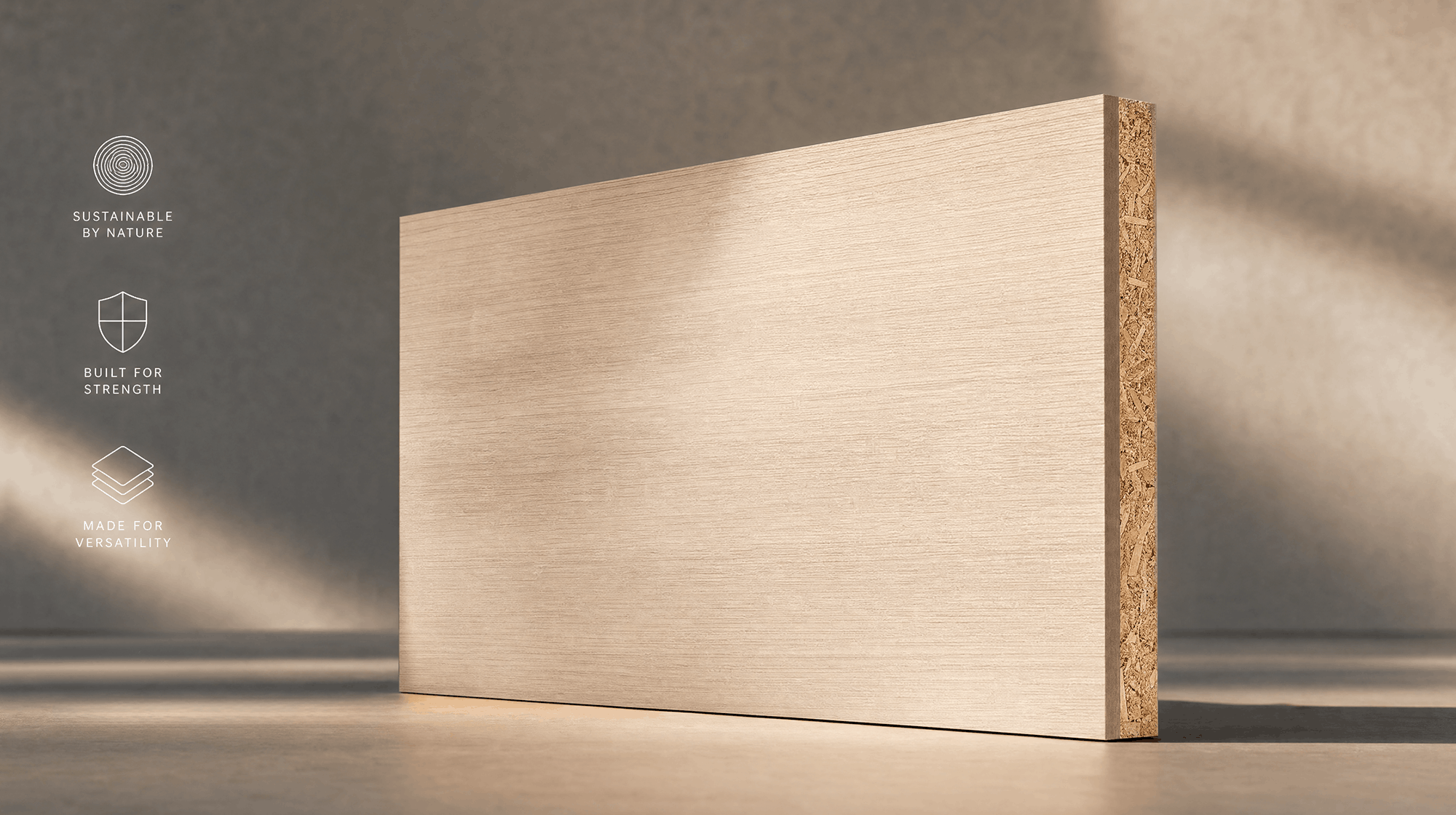
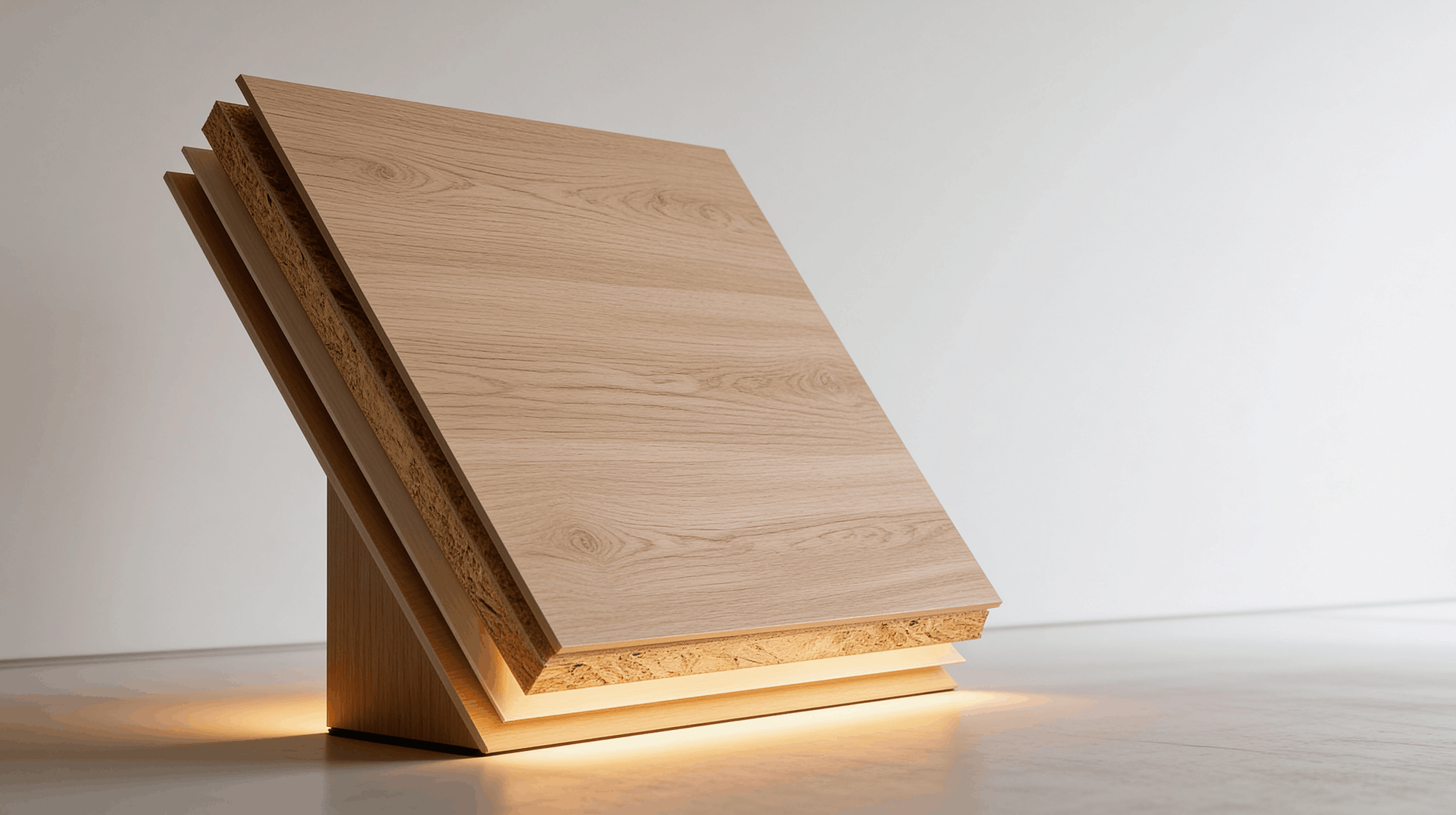
The panel's core is built around a triple cross-ply configuration, with each layer maintaining a consistent strand orientation throughout.
Beyond its primary applications, LSB is also employed across sectors including yachting, shipbuilding, and automotive manufacturing.
Why we use LSB
Every supplier we partner with is among the most rigorously certified in the industry, ensuring that each component we use meets the most demanding standards for durability, environmental responsibility, and visual quality.
5-ply Construction
At its core, the panel features a triple cross-ply structure in which each layer shares the same strand orientation. This construction draws its roots from OSB building panels, providing exceptional mechanical strength along with reliable holding power for screws and all other types of fixings. The two outer layers are composed of poplar microparticles, resulting in uniform, light-toned faces that are both smooth and flat, making them an ideal base for any surface covering.
Diversified Density
Dimensional Stability And Strength
Poplar From Plantations
LSB panels are built on a foundation of poplar wood, sourced exclusively from dedicated non-forestry plantations. Like all agricultural crops, these plantations are replanted after each harvest, making the process inherently renewable and ensuring a minimal environmental footprint. Beyond its sustainability credentials, poplar brings practical advantages to the panel: it is lightweight, easy to work with, does not splinter, and has been shown to reduce tool wear by more than 30% compared to other wood types.
Unlike panels derived from recycled materials, the LSB panel also offers full visibility and traceability across the entire supply chain, along with consistent assurance over the quality of the raw wood material used in production.
We also have
Frequently Asked Questions
LSB (Light Strand Board) is an engineered wood panel made from thin wood strands bonded with resin under heat and pressure — similar to OSB but lighter.
How it’s made:
- Wood is broken into fine strands
- Strands are dried and coated with resin/wax
- Oriented and pressed into panels under high heat
Result: a strong, lightweight structural panel.
LSB offers a better strength-to-weight ratio than plywood, MDF, and solid wood. Compared to plywood, it’s lighter with similar structural strength. Against MDF, LSB wins on weight, strength, and moisture resistance — MDF is dense and swells easily when wet. Versus solid wood, LSB is lighter, more dimensionally stable, and more affordable, though solid wood leads on natural aesthetics and maximum strength.
Generally yes. LSB uses fast-growing or lower-grade wood that would otherwise be wasted, making it more resource-efficient than solid wood. Most LSB is produced with low-emission resins and can qualify for green building certifications like LEED. However, eco-friendliness varies by manufacturer — look for FSC certification and low-VOC resin formulations to confirm.
LSB’s light weight reduces cabinet load on walls and makes installation easier. Its dimensional stability means less warping or shrinking over time compared to solid wood. It machines cleanly for precise cuts and joinery, holds screws well, and accepts veneers or laminates effectively — making it well-suited for high-quality cabinet carcasses where a finished surface will be applied over it.
Yes, generally. LSB sits in the mid-range — more affordable than solid wood, competitively priced with quality plywood, and sometimes slightly more than MDF. The real cost advantage comes from installation: its lighter weight reduces labor time. For cabinetry and structural applications, the strength-to-cost ratio is strong. Pricing varies by region, thickness, and manufacturer.
LSB performs well. It cuts, routes, and machines cleanly, supporting precise joinery and custom shapes. It accepts veneers, laminates, paints, and stains effectively, giving designers broad finish options. It’s available in various thicknesses and panel sizes. One limitation: raw LSB edges aren’t visually refined, so edge banding or facing is typically needed for exposed surfaces in finished applications.
LSB is best suited for cabinet carcasses (the structural box), shelving, drawer boxes, and furniture frames — anywhere structural integrity and light weight matter more than surface appearance. It’s popular in kitchen and bathroom cabinets, closet systems, and built-ins. It’s less ideal for decorative exposed components, where solid wood or MDF with fine finishes are typically preferred.
Yes, for all three — with caveats.
Kitchens and bathrooms: LSB works well for cabinet carcasses but needs proper sealing or moisture-resistant variants in high-humidity zones. Direct water exposure should be avoided.
Closets: Excellent choice — light weight, stable, and takes laminates and veneers well for a clean finished look.
Always confirm moisture resistance ratings for wet-area applications.
Yes. LSB is used in both. Residentially, it’s common in kitchens, closets, and built-in furniture. Commercially, it suits office cabinetry, retail fixtures, and hospitality interiors where weight savings and consistent quality across large volumes matter. Its dimensional stability and machinability make it reliable at scale. For high-traffic commercial applications, verify the specific panel grade meets load and durability requirements.
LSB is more durable than MDF, which dents and swells easily. It’s comparable to plywood in structural durability — both handle impact and load well. Solid wood edges both in raw durability and repairability, though it’s more prone to warping. LSB’s key durability strength is dimensional stability over time. Its weakness is edges and moisture — both require protection in demanding environments.
LSB has moderate moisture resistance — better than MDF but not waterproof. Standard LSB swells with prolonged moisture exposure, so sealing edges and surfaces is important in kitchens and bathrooms. Moisture-resistant variants are available for wet-area applications. For daily use, LSB handles normal wear well when properly finished. Avoid direct water contact or standing moisture on unprotected surfaces.
For finished LSB surfaces (laminate, veneer, or paint), wipe with a damp cloth and mild detergent. Avoid soaking or abrasive cleaners. Dry surfaces promptly — standing moisture is the main risk. For unfinished or raw LSB, apply a sealant to protect edges and faces. Periodically check edges in high-humidity areas for swelling or delamination and reseal as needed.